Reading:
I recently read a great essay by Rachel Kushner called “Learning to Wait” in which she recalls a film screening she attended in Los Angeles in the mid 00’s. The film in question, Michael Snow’s La Région Centrale, is a dizzying experimental work that runs just over three hours.
Though the film is hard to watch, the experience of fixing attention to one focal point for an extended period of time is one that leaves Kushner feeling “changed,” though she struggles to articulate how, only that “the duration was the condition for it.” She then lists a handful of other long and/or experimental films that she’s seen, in whole or in part: Christian Marclay’s The Clock, Béla Tarr’s seven hour Sátántangó, and James Benning’s Ruhr, among others.
Perhaps the most conceptually interesting is Christian Marclay’s The Clock, made from snippets of hundreds of movies throughout history. In each clip, time and clocks are the focus; characters are announcing the time, asking what time of day it is, glancing at their watch, and so on. Kushner writes:
“Screenings were scheduled so that the video montage was synchronized with “real” time, taking viewers out of the film with each strike of a clock, but then putting them back in the film, whose propulsion is the promise of the next clockface, which will then eject them back into their own reality once more. This goes on for twenty-four hours. I stayed for eight, like a workday, and then went home to cook dinner, and knew that in The Clock, people inside the succession of montaged scenes were also having dinner, or otherwise occupying the early-evening hours.”
Rachel Kushner, “Learning to Wait” – Harper’s Magazine, October 2023
This idea of paying attention to something for a long time—in this case, very long movies—is all part of a longer dialogue that has been going on for hundreds of years. Now, in our modern age of endless distractions, the conversation continues. Though our problems with smartphones, shiny new apps, and increasingly powerful algorithms are very new, the problem of attention versus distraction is much older.

The essay goes on to mention a newly-published academic text called Thoreau’s Axe, which explores our problem with distraction through the writings of poets, hermits, and other notable thinkers:
“I learned about [Robert] Baird’s theory of evangelical revivalism in Thoreau’s Axe, by Caleb Smith, a work structured like a book of devotion, offering twenty-eight “readings” that traverse two centuries of attention, and how various figures, from poets to preachers to reformers, have attempted to inculate it, to locate a state of attention, to battle their own distraction, or to encourage (or force) others into a state of submission and self-restraint.”
Rachel Kushner, “Learning to Wait” – Harper’s Magazine, October 2023
A lot of the nonfiction books that I’ve been reading over the past few years are about attention and distraction (Stolen Focus, Digital Minimalism, Deep Work, The Chaos Machine) so Thoreau’s Axe felt like an appropriate next step; I borrowed a copy from a university and started reading this morning over coffee.
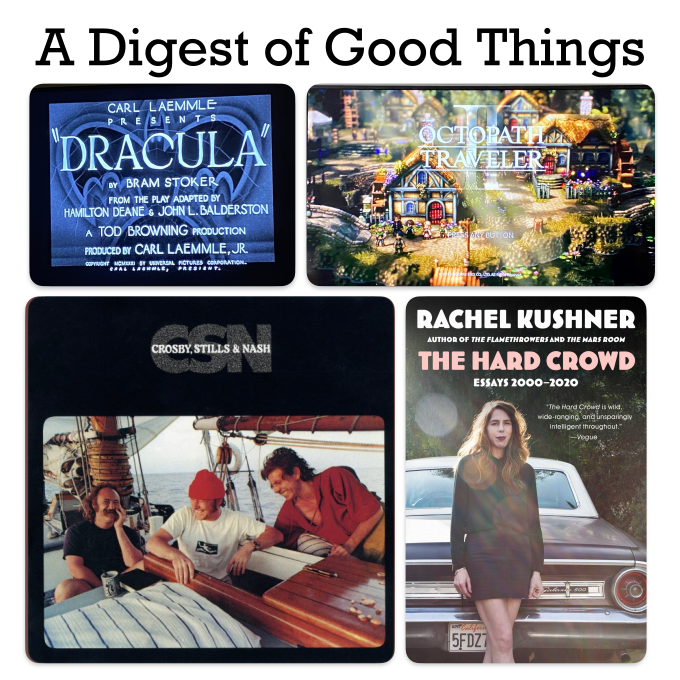
Reading “Learning to Wait” made me want to read more of Rachel Kushner’s essays, so I’m reading her essay collection, The Hard Crowd: Essays 2000-2020. The Hard Crowd includes essays about her participation in a 1,000-mile motorcycle race down the Baja Peninsula, the art of Jeff Koons, and an essay that was the introduction to a new edition of Cormac McCarthy’s “Border Trilogy” (All the Pretty Horses, The Crossing, Cities of the Plain). Well-written nonfiction is a real treat; Kushner’s essays are just that.

One of my favorite things about reading is when one book leads to another and another. In this case, a great essay led me to two books. This game of curiosity and exploration and discovery is one of the reasons why I can’t and don’t keep a strict reading schedule. Instead of planning out what to read next or committing to reading a specific book at any given time, I let my natural curiosity and intuition guide me; every book has its time.
Watching:
Every fall, my friends and I watch a classic horror franchise. One year, we watched all nine of the A Nightmare on Elm Street movies. Another year, we watched all of Friday the Thirteenth (eleven! Not counting Freddy vs. Jason which we watched with the Elm Street movies). We also watched most of the Halloween franchise, including the critically underrated Halloween III that doesn’t have Michael Myers. We lost steam when we got to Rob Zombie’s 2007 reboot. There are exactly two movies that I stopped watching without finishing: One was Rob Zombie’s Halloween, the other was Cats.
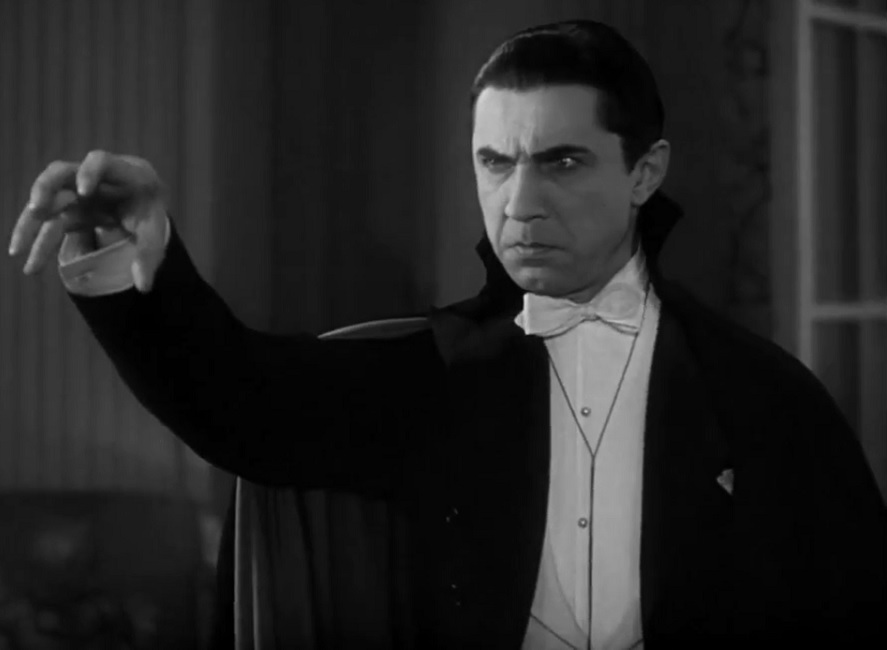
This year, we decided to watch the original Universal Classic Monsters. We started with Dracula and opted to watch it with the new Philip Glass and Kronos Quartet score that was commissioned in 1999. Some people say that the score detracts from the film, but honestly I can’t imagine watching the movie without it. That isn’t to say the movie is bad without it—it’s not, it’s a great movie—but rather that the Philip Glass score complements it well and elevates it to a new level. It makes a movie that’s nearly 100 years old a little more watchable.
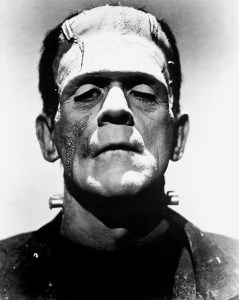
We just finished Frankenstein the other day. The most surreal thing about watching these old movies is the feeling of having déjà vu for an hour straight. I’ve seen stills of Bela Lugosi as Dracula and of Boris Karloff as Frankenstein’s monster, I’ve heard people say “It’s alive! It’s alive!” and countless impersonations of Lugosi’s accent, and most pervasively, I’m familiar with all of the tropes that these movies spawned and the cultural impact that they’ve had. What’s strange is experiencing all of this in reverse. I have never seen these movies before but I know exactly what will happen.
I think The Invisible Man might be next, but we’ll see. One movie at a time.
Listening:
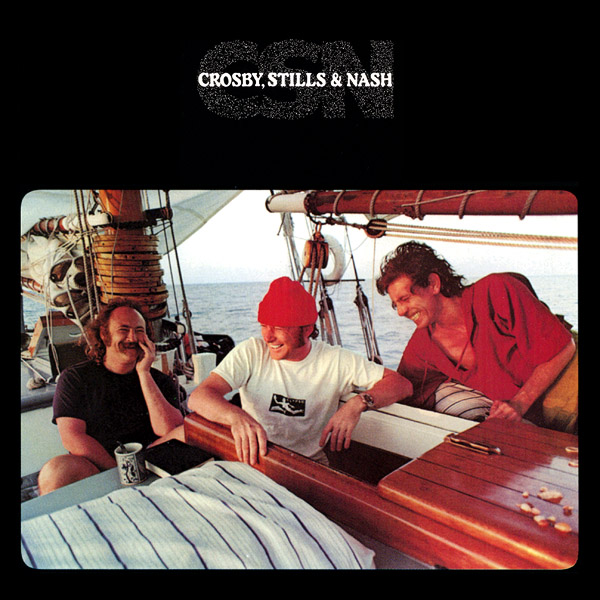
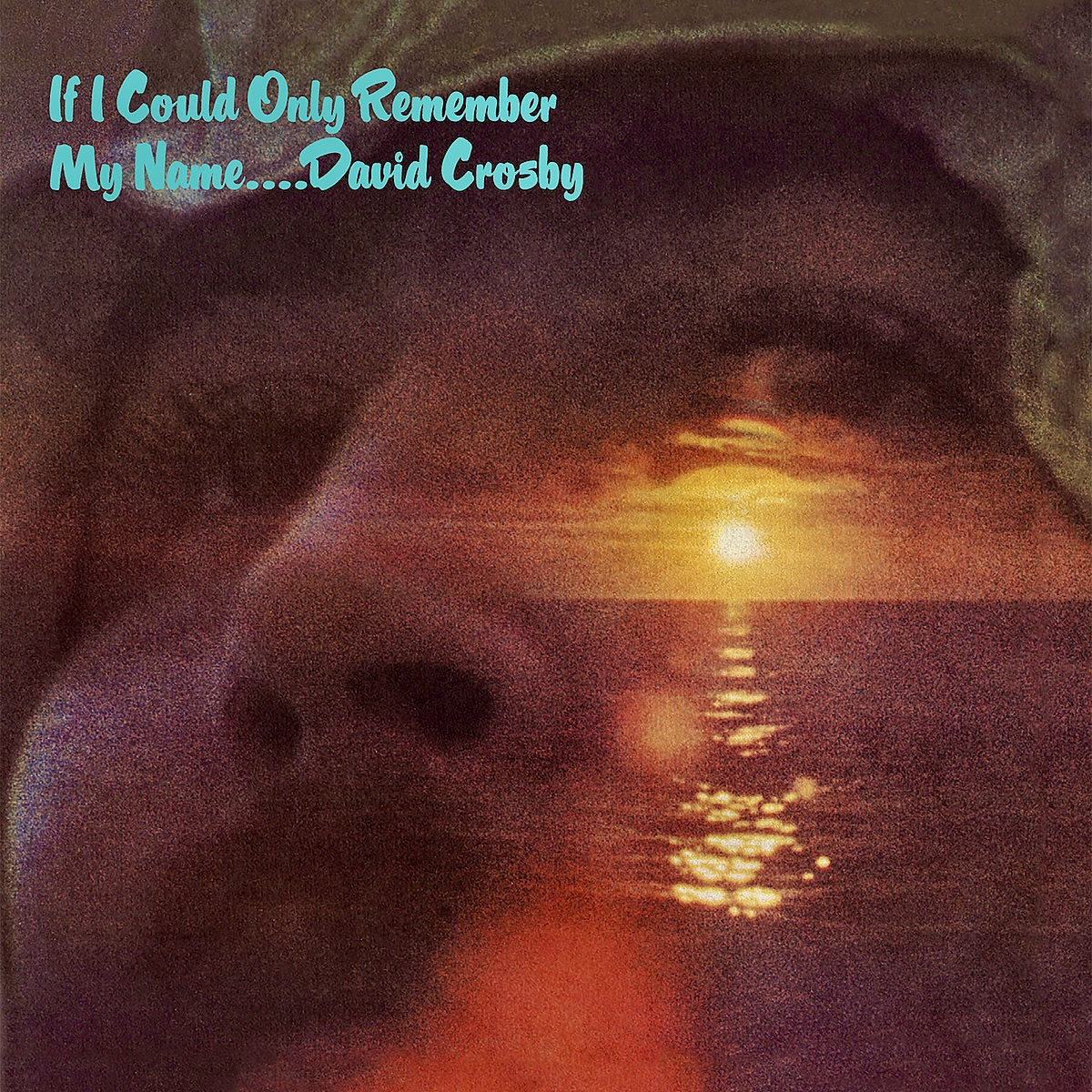
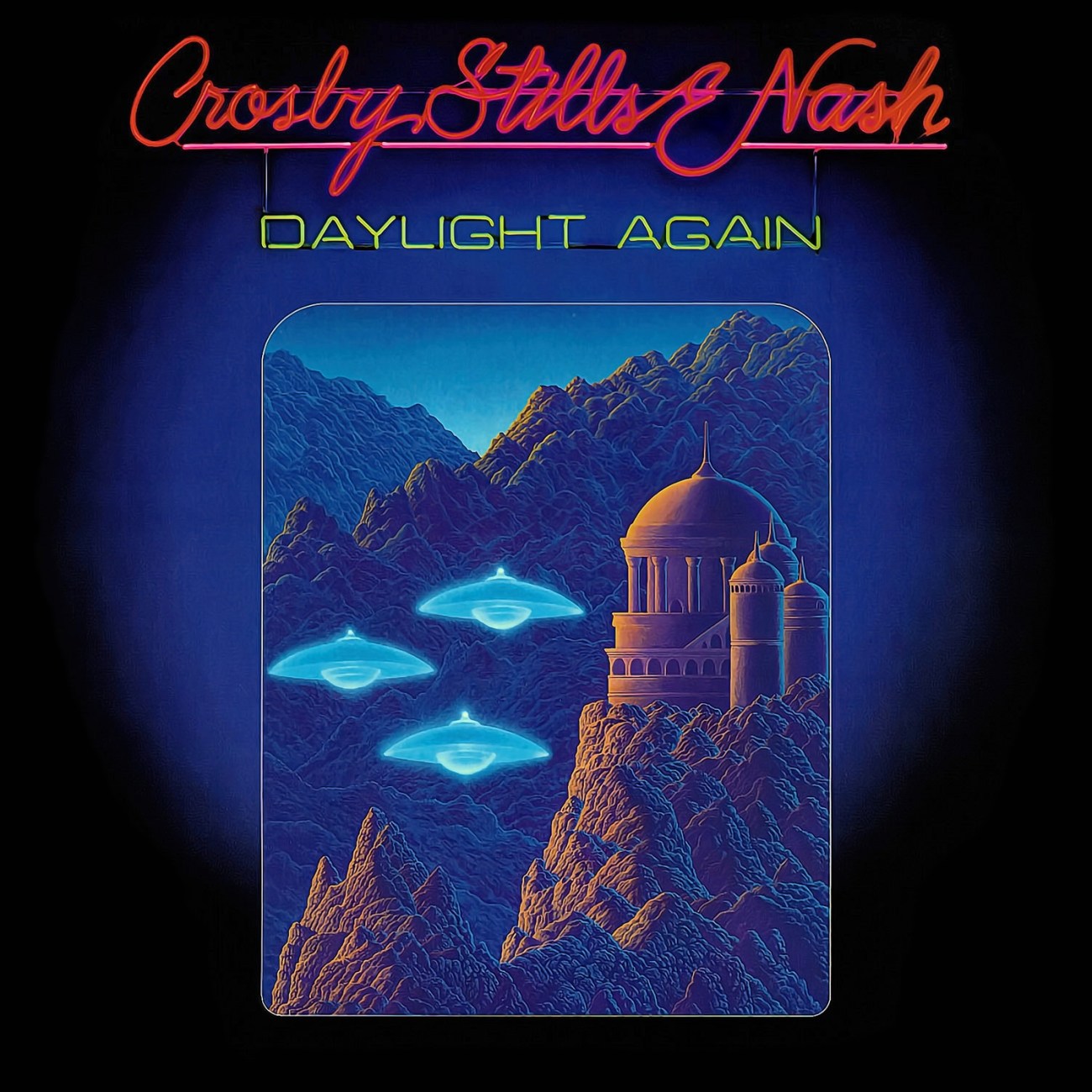
I’ve been listening to a lot of Crosby, Stills & Nash lately, though surprisingly no Neil Young. Just about all of my favorite CSN songs have no Y. Here’s what’s on loop:

My ambient playlist has been getting a lot of use lately too. I usually throw it on if I’m writing or journaling since it helps me focus. A few ambient/drone favorites as of late:
- Forest Management – “Interior Music 010”
- Yui Onodera – “Too Ne I” from Too Ne
- Celia Hollander – “6:58pm”
- Texture Harvesting – “Zzzzzzzzzzz”
- Tetsu Inoue – “Zen”
“Zen” reminds me a lot of the music I used to hear in science museums and aquariums, maybe the sort of stuff I hear in abstract puzzle games like The Talos Principle or Antichamber.
Playing:
This week I finally started Octopath Traveler 2, a game that I had been eagerly anticipating ever since I spent 100+ hours playing the original. The music is amazing, the visuals are stunning, and the gameplay has everything I love about the first game but with some new quality-of-life improvements. It’s incredibly rare that I fall in love with a game for everything—the story, characters, art, music, combat system—but Octopath really struck a chord with me. There was a point where I was filling up pages in my notebook with build ideas, damage calculations, and party configurations. I cannot wait to learn more about Octopath 2’s battle system and to fall in love with the game all over again.


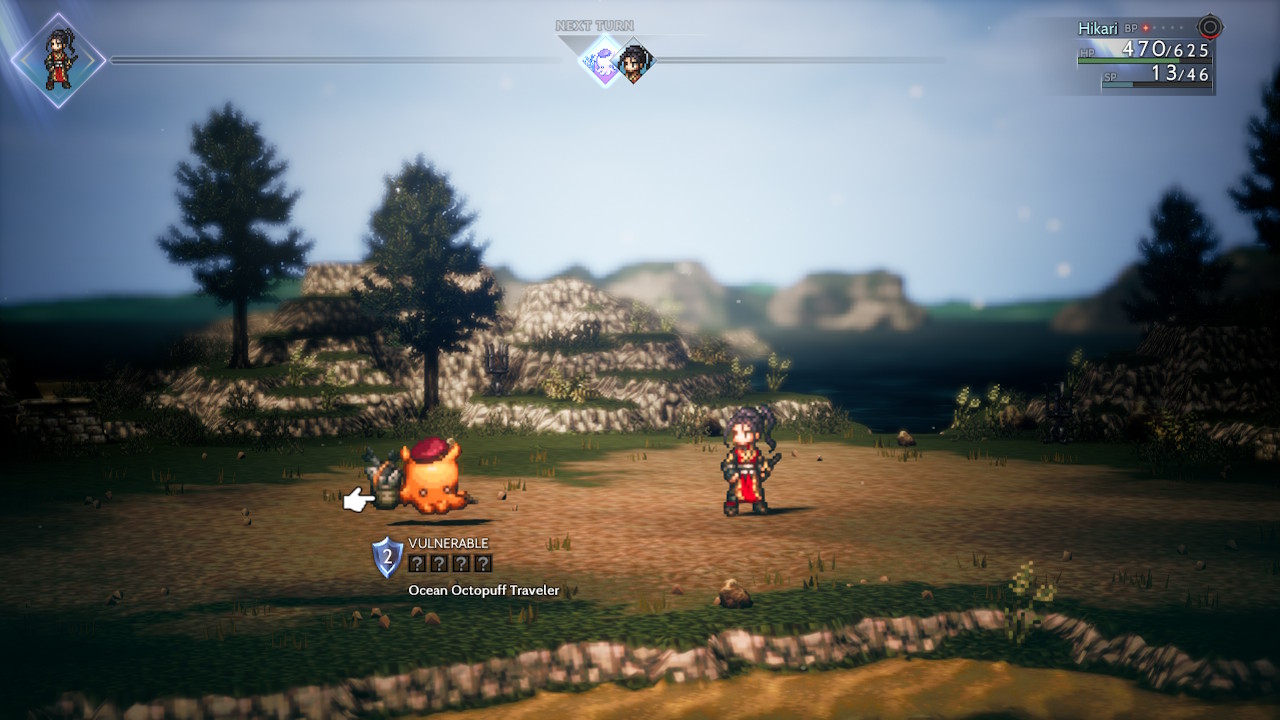
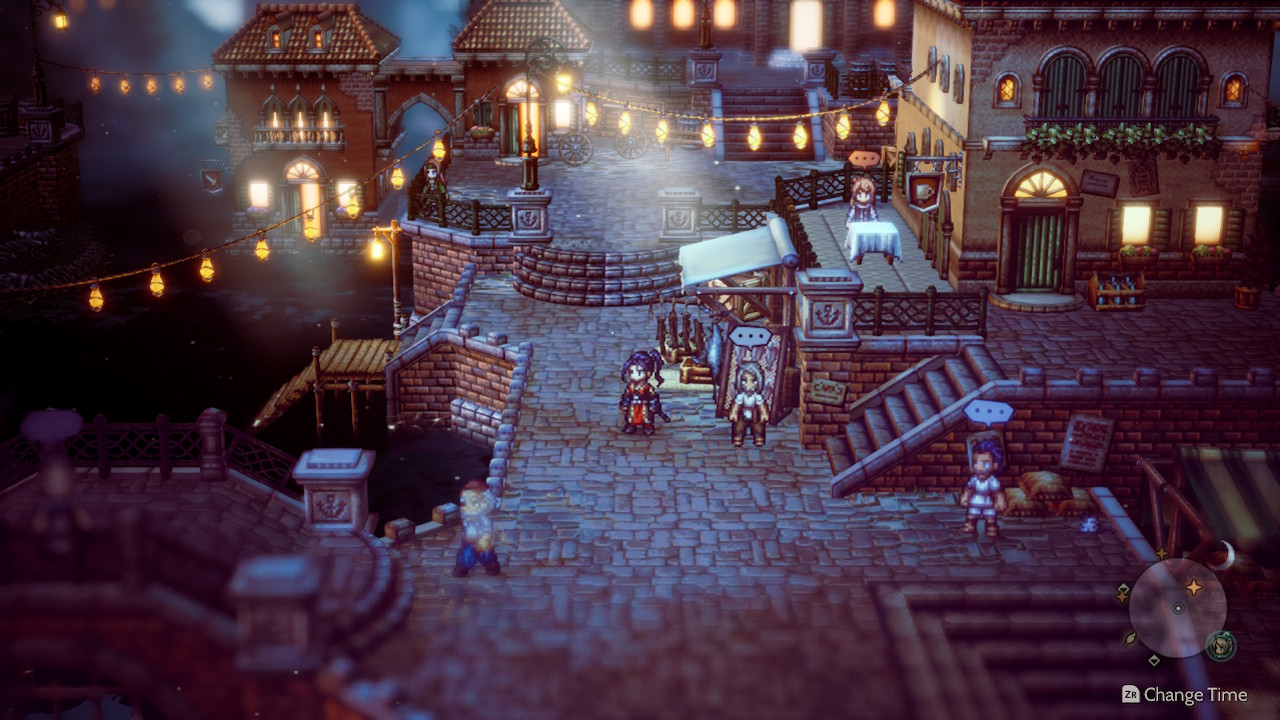
I started Octopath 1 with Alfyn, the apothecary, but decided to start Octopath 2 with Hikari, the warrior. So far, I beat Hikari’s first chapter and have made my way East to the town of Canalbrine, home to Castti, the apothecary. For the apothecary, you used to have to learn what each combination of ingredients did by their name alone. In 2, the concoctions you make in battle are now clearly labeled—no guesswork or learning required. I will say that actually learning the intricacies of the first game’s mechanics was deeply satisfying, but I understand why they made it easier.
Until next time…
I am always open to media suggestions. Do you have a good book or essay collection to recommend? A CSNY deep cut or live performance? Or maybe you think Creature from the Black Lagoon is better than Frankenstein and Dracula and that I should watch it next instead of The Invisible Man. Either way, I’d love to hear from you.
If you enjoy my writing, you can get new posts sent to your email; the subscription box is at the bottom of the page. Or you can follow me on Instagram (@/benjaminheels), where I also share new blog posts and videos.
 Ben Heels